
How Online Auctions Are Transforming Equipment Sales Across Industries

Equipment sales used to be predictable—and painfully inefficient. Assets changed hands through dealers, brokers, classified listings, or closed-door negotiations that favored whoever had more time, leverage, or information. Pricing lagged the market. Sales dragged on. Capital stayed stuck.
Online auctions have disrupted that model across industries.
What was once seen as a liquidation-only channel is now a mainstream, market-driven sales engine used by businesses to move equipment faster, price assets more accurately, and unlock value at scale.
This shift is part of a much larger equipment strategy—one that’s explored in depth in Smart Moves: Using Online Auctions to Scale or Streamline Your Business Operations, where auctions are positioned not as a sales tactic, but as an operational advantage.
Why Traditional Equipment Sales Broke Down
Across industries, the same friction points existed:
- Limited buyer reach
- Subjective pricing
- Slow negotiation cycles
- High dealer markups
- Poor visibility into real demand
Whether you were selling manufacturing machinery or restaurant equipment, outcomes depended heavily on who you knew—not what the asset was actually worth.
Online auctions replaced that fragmentation with structure, competition, and transparency.
Construction & Heavy Equipment: Faster Turns, Stronger Pricing
Construction and heavy equipment markets move fast—and idle assets are expensive. Traditionally, selling excavators, loaders, or specialized tools meant dealer trade-ins or regional brokers with limited exposure.
Online auctions changed the game by:
- Expanding buyer pools nationally
- Allowing contractors to sell during downtime instead of waiting
- Establishing fair-market value through competitive bidding
For construction businesses, this means tighter fleet management and faster capital recycling—especially critical during project transitions or seasonal slowdowns.
Manufacturing: Monetizing Surplus and Upgrades Efficiently
Manufacturers routinely upgrade machinery to improve throughput, automation, or compliance. The problem? Old equipment often sits unused while companies focus on new installs.
Online auctions allow manufacturers to:
- Sell surplus machinery quickly
- Recover capital from production-line changes
- Avoid storage and depreciation losses
- Reach niche buyers seeking specific models or parts
Instead of treating old equipment as sunk cost, manufacturers now treat it as recoverable value.
Restaurants & Hospitality: High Turnover, High Velocity Sales
Few industries face faster equipment turnover than restaurants and hospitality. Closures, rebrands, expansions, and remodels create constant inventory movement.
Online auctions work here because they:
- Move equipment in days—not months
- Attract buyers from multiple regions
- Simplify bulk asset sales
- Reduce time spent on piecemeal listings
For restaurant operators, auctions provide an exit strategy that preserves cash during already stressful transitions.
Warehousing & Logistics: Scaling Infrastructure Without Overpaying
Warehouses, fulfillment centers, and logistics providers rely heavily on racking, forklifts, conveyors, and material-handling systems. Traditional resale channels rarely matched demand efficiently.
Online auctions now enable:
- Rapid resale of surplus infrastructure
- Access to discounted, commercial-grade assets
- Faster site consolidations and relocations
As logistics networks evolve, auctions help operators reconfigure footprints without locking up capital.
_1.png)
Retail & Office Equipment: Turning Closures Into Capital
Retailers and office-based businesses often underestimate the resale value of fixtures, furniture, POS systems, and IT assets.
Auctions bring structure by:
- Packaging assets professionally
- Marketing to buyers beyond local markets
- Creating urgency through fixed timelines
Instead of writing off equipment during closures or downsizing, businesses use auctions to recover meaningful capital.
Why Auctions Work Across So Many Industries
Despite differences in equipment type, industries benefit from auctions for the same reasons:
1. Demand Is Aggregated
Auctions centralize buyers who are already motivated, qualified, and ready to transact.
2. Pricing Is Objective
Bidding eliminates guesswork and emotional pricing.
3. Timelines Are Predictable
Businesses can plan transitions without open-ended sales cycles.
4. Scale Is Built In
One platform replaces dozens of fragmented sales efforts.
This consistency is what makes auctions scalable across sectors.
The Strategic Shift: From “Last Resort” to First-Class Channel
The biggest transformation isn’t technological—it’s mental.
Businesses no longer view auctions as a last resort. They use them intentionally to:
- Support upgrades
- Enable growth
- Accelerate restructuring
- Improve balance sheets
This shift aligns directly with the broader equipment strategy framework outlined in the pillar.
Where Auction Masters Fits In
Auction Masters supports this cross-industry transformation by providing a structured, professional marketplace that scales with business needs.
Companies rely on Auction Masters for:
- Industry-spanning buyer reach
- Transparent, trusted listings
- End-to-end execution
- Minimal operational disruption
Whether selling a single asset or an entire facility’s worth of equipment, the process stays predictable and efficient.
The Takeaway: Industry Doesn’t Matter—Execution Does
From construction to manufacturing, hospitality to logistics, the pattern is clear. Online auctions are no longer niche—they’re foundational.
They allow businesses to:
- Move assets faster
- Capture real market value
- Reduce operational drag
- Make smarter capital decisions
Industries may differ, but the outcome is the same: better execution with less friction.
Online auctions aren’t transforming equipment sales because they’re trendy. They’re doing it because they work across industries, across asset types, and across business stages.
Upcoming Auctions
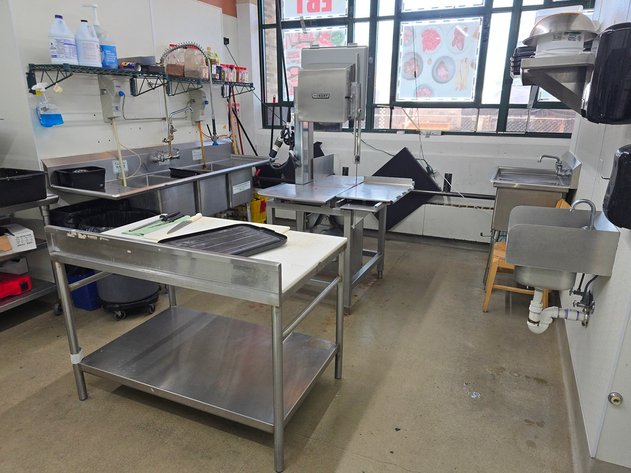
- Sep 1 @ 1:00pm CDT
- Sep 21 @ 1:00pm CDT
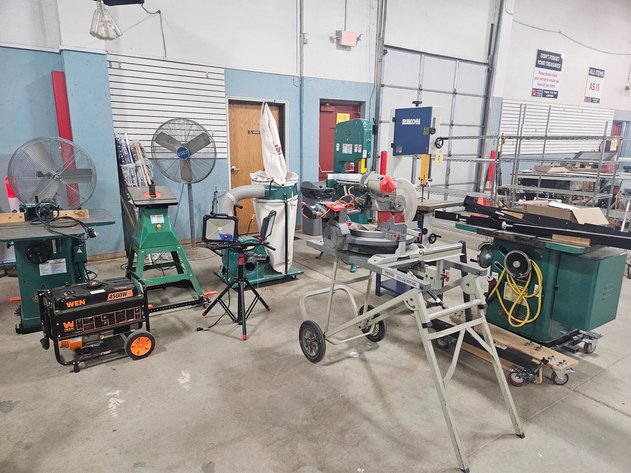
- Sep 16 @ 11:00am CDT
- Sep 22 @ 10:00am CDT

- Sep 15 @ 1:00pm CDT
- Sep 22 @ 1:00pm CDT

- Sep 15 @ 1:00pm CDT
- Sep 22 @ 6:30pm CDT

- Sep 16 @ 7:00pm CDT
- Sep 27 @ 3:00pm CDT

- Sep 18 @ 6:00pm CDT
- Sep 28 @ 1:00pm CDT

- Sep 18 @ 10:00am CDT
- Oct 5 @ 1:00pm CDT