How Restaurants and Bars Can Liquidate Surplus Equipment
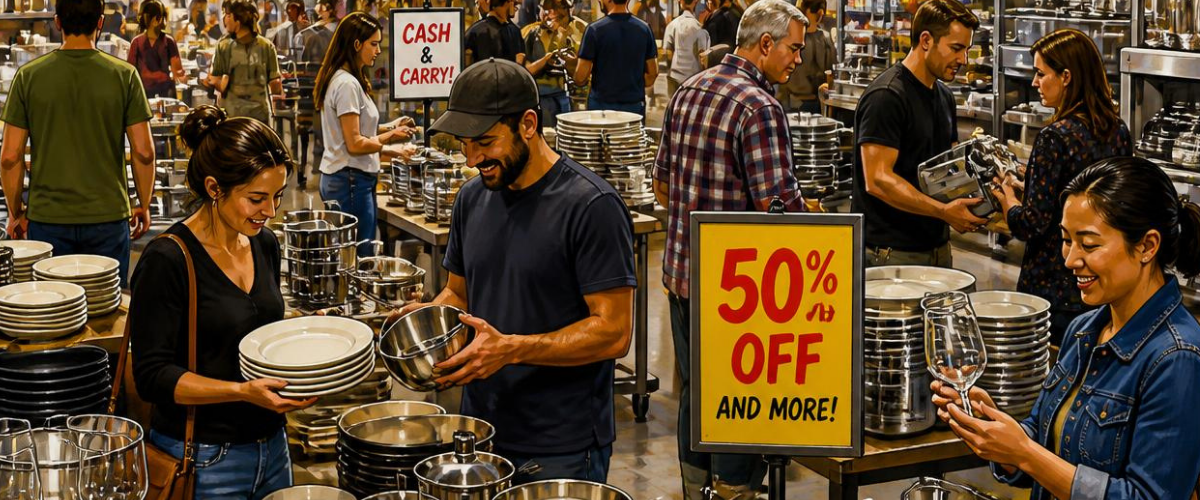
Running a restaurant or bar means constantly adapting, updating equipment, renovating spaces, and adjusting operations to meet the business's needs today. Along the way, it's easy to accumulate equipment that no longer earns its place.
An extra refrigerator is taking up corner space. A prep table nobody uses. Bar equipment is a concept that has moved on. These assets sit idle, occupy valuable square footage, and hold capital that could be working somewhere else.
Liquidating surplus equipment isn't something reserved for businesses that are closing. Plenty of restaurants do it simply to run leaner, recover value, and clear room for what comes next. Depending on your timeline and goals, options include private sales, trade-ins, dealer purchases, and professionally managed auctions.
What Counts as Surplus Restaurant Assets?
Surplus assets are equipment, fixtures, or furnishings that the business no longer needs but that still hold genuine value on the secondary market. Most restaurant owners are surprised by how much of what they have actually qualifies.
Commercial cooking equipment leads the way — ovens, fryers, ranges, griddles, charbroilers. Refrigeration isn't far behind: reach-in coolers, freezers, prep tables, and walk-in components. Food preparation equipment like mixers, slicers, food processors, and dough sheeters draws consistent buyer interest as well.
Bars have no shortage of sellable assets either — ice machines, keg systems, back bar coolers, glass washers, beverage dispensers. Stainless steel worktables, sinks, shelving, storage racks, dining furniture, POS systems, display cases, warming equipment, and smallwares like cookware, prep containers, and serving pieces can all fetch real money on the secondary market.
Taking stock of what you have is the first step toward recovering capital rather than letting it gather dust.
Why Bars and Restaurants Liquidate Surplus Assets
Surplus equipment builds up for all kinds of reasons, most of them the natural byproduct of a business that's moving forward.
Kitchen remodels and equipment upgrades leave behind functional assets with nowhere to go. Menu expansions, concept changes, and efficiency improvements bring in new equipment that pushes the old out of rotation.
Relocations, downsizing, multi-location consolidations, and rebrands all generate inventory that no longer fits the operation. Seasonal restaurants and catering companies often find equipment that barely gets used year-round. Ownership changes and closures can surface surplus assets all at once.
Whatever the reason, unused equipment represents capital sitting still, the capital that could be funding renovations, replacement equipment, or other business priorities.
The Hidden Costs of Holding Onto Unused Equipment
Storage has a way of making idle equipment feel like a non-issue. It rarely is.
Large commercial equipment eats into kitchen, warehouse, and storage space that the business could be using for something that actually matters. Meanwhile, storage costs, insurance, maintenance, and depreciation keep accumulating in the background, and with every passing month, newer models chip away at what that equipment is worth on the open market.
The longer it sits, the smaller the return. Liquidating while buyer demand is healthy is how businesses get ahead of that slide instead of watching value disappear.
Choosing the Right Way to Liquidate Surplus Equipment
The right approach depends on your timeline, how much equipment needs to be moved, and what you need to walk away with.
Private sales work for a single piece but trade speed for effort — advertising, negotiating, and coordinating pickups every time. Dealer purchases move faster, though the offers reflect that convenience. Trade-ins are straightforward but limited to whoever is selling the replacement.
For businesses moving multiple assets, auctions make more sense. Everything gets marketed and sold through one event, in front of a broad audience of qualified buyers — no juggling individual transactions.
If an auction is on your radar, our guide Quick, Profitable Auctions for Restaurant Equipment covers what buyers look for, how the process works, and how to set your equipment up for the best possible result.
Preparing Surplus Equipment for Liquidation
A little preparation before the sale makes the process smoother and puts your equipment in the best possible light.
Start by cleaning everything thoroughly — grease, dust, food residue, anything that obscures the actual condition. Round up accessories like racks, trays, shelves, and attachments, and keep them with the right piece of equipment.
Put together an inventory that includes the equipment name, manufacturer, model number, serial number, and any included accessories. If manuals or maintenance records are on hand, keep them together; buyers notice when that information is available.
Well-organized equipment is easier to evaluate, easier to photograph, and easier to sell.
Why Auctions Work Well for Restaurant Equipment Liquidations
When multiple pieces of equipment need to move, auctions create something private sales rarely can — a competitive buying environment with real market-driven pricing.
No single buyer's offer will ever match what genuine competition produces. Broad marketing puts your inventory in front of restaurant owners, catering companies, food service businesses, equipment dealers, and commercial buyers who aren't browsing — they're actively looking for what you have.
When those buyers compete against each other, the equipment finds its real market value instead of settling for whatever one person was willing to pay.
And running it all through one event means no sprawling chain of individual listings, no repetitive negotiations, no coordinating pickups one buyer at a time.
Auction Masters handles everything from the first inventory review to the final removal by bringing a large network of qualified buyers to your equipment, so the value locked in surplus assets comes back to the business, without the grind that private sales always seem to turn into.
Turning Surplus Assets Into Business Capital
Clearing out unused equipment is about more than reclaiming storage space. It's a chance to put dormant capital back to work.
Put the proceeds toward replacement equipment, a kitchen renovation, or expansion plans already taking shape. Use it to shore up cash flow, cut storage costs, or invest in technology and operational improvements that make the business run better day to day. However it gets used, it's capital that was previously doing nothing, now back in play.
Every piece of equipment sitting idle in storage is depreciating. Liquidation converts those assets into working capital before that depreciation erases the opportunity.
Ready to Liquidate Your Restaurant Equipment?
Whether you run a restaurant, bar, café, catering company, hotel, or any other food service operation, liquidating surplus equipment is one of the more straightforward ways to recover value and make room for what's next.
If you're ready to move surplus equipment efficiently and recover what it's worth, reach out to the Auction Masters team to talk through your upcoming auction.
Upcoming Auctions
- Oct 15 @ 4:00pm CDT
- Oct 26 @ 1:00pm CDT
- Oct 13 @ 12:00pm CDT
- Oct 26 @ 1:00pm CDT
- Oct 9 @ 2:00pm CDT
- Oct 26 @ 1:00pm CDT
- Oct 9 @ 9:00am CDT
- Oct 27 @ 10:00am CDT
- Oct 9 @ 10:00am CDT
- Oct 27 @ 1:00pm CDT
- Oct 23 @ 6:00pm CDT
- Nov 2 @ 1:00pm CST
- Oct 13 @ 1:00pm CDT
- Nov 4 @ 1:00pm CST