
Quick, Profitable Auctions for Restaurant Equipment
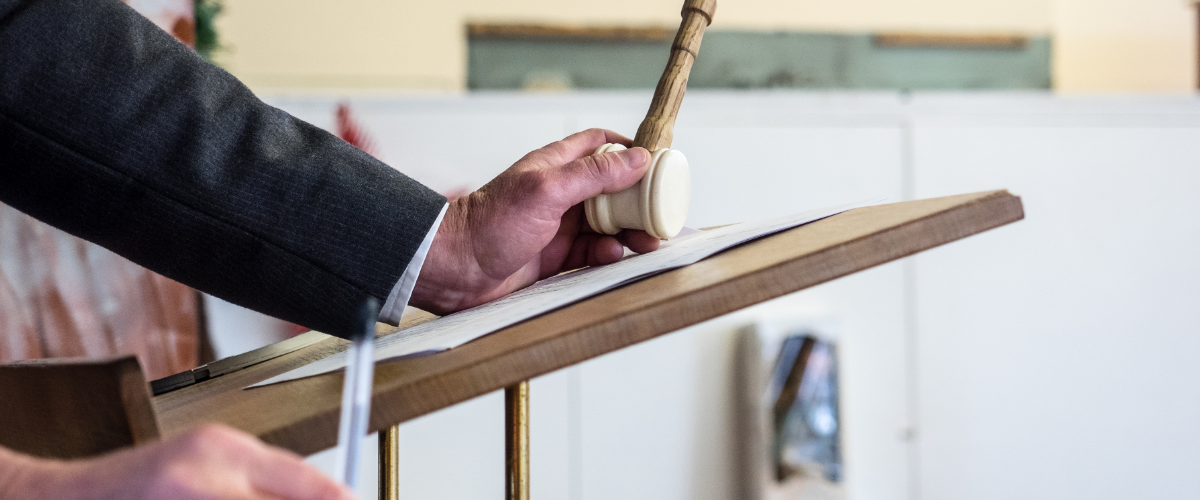
Every restaurant hits a point where certain equipment stops earning its place. A remodel, a menu shift, a relocation, an expansion, a closure, any of these can leave valuable assets sitting idle. Rather than watching equipment lose value in storage, many restaurant owners turn to auctions to reach buyers who are actively hunting for commercial kitchen equipment.
Restaurant equipment auctions provide a structured way to sell everything from a single appliance to an entire commercial kitchen.
This guide walks through when to auction, what buyers are actually after, how the process unfolds, and what makes the difference between a good result and a great one.
When Is the Right Time to Auction Restaurant Equipment?
Timing matters more than most sellers realize. Equipment that's still operational and well cared for attracts a very different level of buyer interest than something that's been gathering dust in a back room or needs repairs before it can be plugged in again.
Businesses typically auction equipment when:
- Closing a restaurant or café
- Remodeling or expanding a kitchen
- Replacing older equipment with newer models
- Relocating operations
- Downsizing
- Shifting menus or concepts
- Consolidating multiple locations
- Clearing surplus inventory
Planning also smooths out major business transitions, moving multiple assets through one organized auction instead of managing a string of separate private sales.
Why Restaurant Equipment Auctions Deliver Faster Results
Private sales come with a familiar frustration: listings to build, inquiries to field, prices to negotiate, and pickup logistics to coordinate across a parade of different buyers. Auctions replace all of that with a single, competitive marketplace where motivated buyers come to you.
The advantages are straightforward:
- Multiple assets sold through a single auction
- Buyer reach that extends well beyond the local market
- Competitive bidding that drives pricing
- Far less time managing individual transactions
- Faster removal of surplus equipment
Whether you're selling a handful of pieces or an entire commercial kitchen, auctions connect you with qualified buyers while taking most of the administrative burden off your plate.
Restaurant Equipment That Performs Well at Auction
Well-maintained equipment that's ready for continued use consistently draws buyer interest across a wide range of categories.
Cooking Equipment
Commercial ranges, convection and combination ovens, fryers, griddles, charbroilers, and steamers are staples of any commercial kitchen, and they stay in demand from expanding restaurants and new operations alike.
Refrigeration
Reach-in refrigerators and freezers, walk-in coolers and freezers, refrigerated prep tables, display refrigeration, and blast chillers remain among the most sought-after categories at auction. Reliable refrigeration is a priority investment for virtually every food service business.
Food Preparation Equipment
Commercial mixers, meat slicers, food processors, dough sheeters, and vegetable preparation equipment help bakeries, commissaries, catering operations, and restaurants run more efficiently, and buyers know it.
Beverage and Bar Equipment
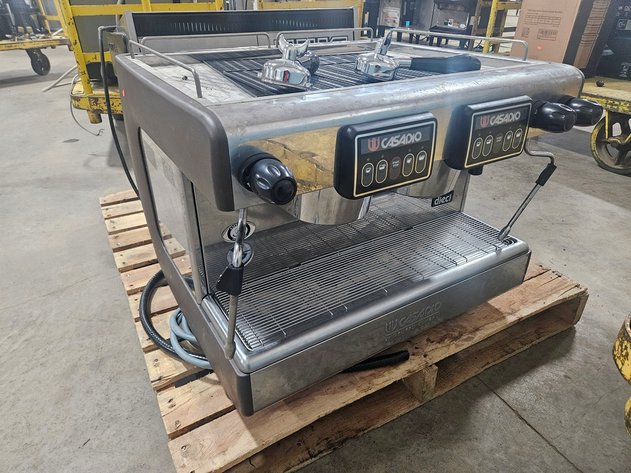
Ice machines, espresso machines, coffee brewers, draft beer systems, bar refrigeration, and beverage dispensers attract buyers from restaurants, cafés, hotels, bars, and entertainment venues.
Stainless Steel Fixtures
Support equipment draws consistent interest as well as prep tables, work tables, shelving, sinks, exhaust hoods, dishwashers, and storage racks. Offering related equipment together tends to create a stronger buying opportunity than selling each piece in isolation.
Who Buys Restaurant Equipment at Auction?
The buyer pool for restaurant equipment runs wider than most sellers expect. Demand comes from well beyond traditional food service businesses.
Common buyers include:
- New restaurant owners are building out their first commercial kitchen
- Established restaurants expanding or opening additional locations
- Bars, cafés, and coffee shops
- Catering companies and commissary kitchens
- Hotels and hospitality businesses
- Schools, universities, and institutional dining facilities
- Grocery stores with prepared food departments
- Food manufacturers and commercial kitchens
- Restaurant equipment dealers and resellers
Some buyers are tracking down one specific appliance. Others are building out a full kitchen from scratch. That spectrum of demand keeps activity steady across cooking, refrigeration, food preparation, and stainless steel categories, and it gives sellers a market reach that private sales simply can't match.
How the Restaurant Equipment Auction Process Works
Most restaurant equipment auctions follow a clear, manageable process.
Initial Consultation
The process starts with a review of your equipment, goals, and timeline to determine the right auction approach for your situation.
Equipment Evaluation
Each piece of equipment gets documented with the manufacturer, model, condition, quantity, and included accessories. Accurate information helps buyers evaluate equipment with confidence and creates stronger auction listings.
Auction Marketing
Equipment is marketed to buyers actively searching for commercial restaurant equipment, using detailed descriptions and quality photographs that give buyers what they need to bid with confidence.
Buyer Bidding
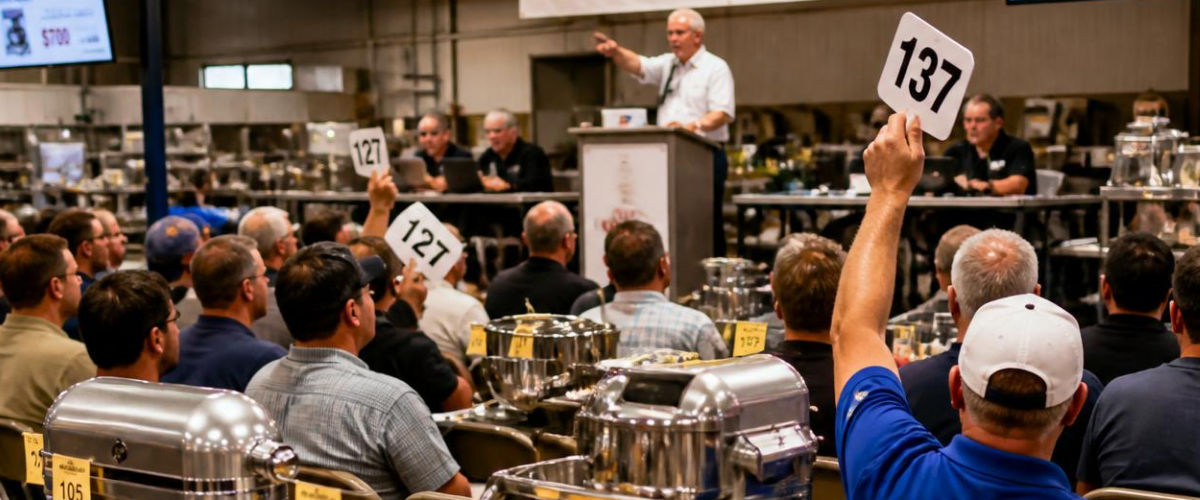
Interested buyers compete through the auction online, live, or a combination of both, depending on what fits the situation.
Sale Completion and Equipment Removal
Once bidding closes, buyers complete payment according to auction terms, and equipment removal is coordinated to keep everything organized and on schedule.
What Helps Restaurant Equipment Sell for More?
No auction can guarantee a specific price, but certain factors consistently influence buyer interest and overall results.
Equipment Condition
Commercial buyers pay close attention to maintenance history. Clean equipment with obvious signs of routine care gives buyers far more confidence than anything that looks neglected or incomplete.
Brand Reputation
Established commercial brands draw stronger interest because buyers know their durability, their serviceability, and the availability of replacement parts. A proven track record matters to buyers making real purchasing decisions.
Complete Equipment Packages
Many buyers are outfitting a full kitchen or building out an expansion. Offering complementary equipment together with refrigeration, cooking equipment, prep stations, and stainless steel work tables makes an auction more compelling than a scattered collection of individual pieces.
Accurate Listings
Clear photographs, complete descriptions, model numbers, and operating details give buyers what they need to evaluate equipment before they bid. The more accurate and complete the listing, the easier the decision becomes.
Market Demand
Some categories draw broader interest than others. Equipment that works across a wide range of food service operations will always reach a larger audience than highly specialized items with a narrow use case.
Preparing Restaurant Equipment for Auction
A little preparation goes a long way toward how equipment presents and how smoothly the selling process runs.
Clean the Equipment
Remove grease, dust, food residue, and buildup so buyers can actually assess what they're looking at. First impressions matter even in an auction setting.
Organize Accessories
Pull together shelves, racks, baskets, attachments, manuals, and any other components that belong with each piece. Complete packages make for a better buying experience and often perform better at auction.
Document Your Equipment
Where possible, have ready:
- Manufacturer information
- Model and serial numbers
- Service or maintenance records
- Owner's manuals
- Known operating details
Solid documentation strengthens listings and gives buyers an added layer of confidence.
Create an Inventory
Put together a complete equipment list before the auction gets underway. An organized inventory simplifies planning and makes sure nothing gets left out of the sale.
Common Mistakes That Reduce Auction Success
A little forethought helps businesses sidestep the issues that make equipment harder to sell.
Waiting Until the Last Minute
Holding off on auction planning until a renovation, relocation, or closure is already in motion cuts into the time available for proper inventory preparation and marketing.
Incomplete Equipment Information
Missing model numbers, vague descriptions, and unclear details make it harder for buyers to evaluate what's on offer, and hesitant buyers bid less aggressively, or not at all.
Missing Accessories
Shelves, racks, baskets, lids, and attachments tend to get separated from equipment during moves. Tracking them down and reuniting them with the right pieces makes for a more complete and appealing offering.
Poor Organization
Equipment that's logically grouped and backed by a clear inventory is easier for buyers to evaluate and easier for sellers to manage from start to finish.
Signs It's Time to Sell Restaurant Equipment
Restaurant equipment is a real asset, but unused equipment takes up space and holds capital that could be working somewhere else.
Consider an auction if:
- Equipment is no longer being used
- You're upgrading to newer models
- A remodel is changing the kitchen layout
- You're relocating or consolidating locations
- Storage space is running short
- Your menu or business concept has shifted
- You're closing a restaurant or scaling back operations
Catching these situations early means planning and moving equipment while it still holds genuine value for other commercial kitchens.
Turning Surplus Restaurant Equipment Into Business Capital
Unused restaurant equipment doesn't have to keep sitting in storage. A professionally managed auction turns surplus assets into capital that can actually go back to work.
Auction proceeds can be used to:
- Purchase replacement equipment
- Fund renovations or expansions
- Improve cash flow
- Reduce storage and maintenance costs
- Support other business investments
Beyond the financial return, clearing unused equipment also frees up valuable workspace and lets the business stay focused on what's actually supporting current operations.
Ready to Sell Your Restaurant Equipment?
Whether you're upgrading a kitchen, closing a location, relocating, or clearing out surplus equipment, Auction Masters provides a structured auction process built to connect commercial kitchen equipment with qualified buyers.
From individual assets to complete restaurant inventories, our team helps restaurants, cafés, bars, hotels, catering companies, and other food service businesses market equipment efficiently while keeping the selling process organized from start to finish.
Reach out to Auction Masters to talk through your equipment, timeline, and auction goals, and find out how a professionally managed restaurant equipment auction can help you recover real value from assets that are no longer working for you.
Want to Learn More?
If you're looking to explore specific areas in more detail, these guides can help:
Upcoming Auctions
- Oct 1 @ 5:00am CDT
- Oct 13 @ 1:00pm CDT
- Oct 8 @ 2:00pm CDT
- Oct 19 @ 1:00pm CDT
- Oct 14 @ 6:00pm CDT
- Oct 20 @ 10:00am CDT
- Oct 7 @ 10:00am CDT
- Oct 20 @ 1:00pm CDT
- Oct 9 @ 8:00am CDT
- Oct 20 @ 1:00pm CDT
- Oct 6 @ 12:00pm CDT
- Oct 20 @ 1:00pm CDT
- Sep 25 @ 11:00am CDT
- Oct 21 @ 1:00pm CDT